Struggling With Short Temper? How Hypnotherapy Helps You Regain Control!
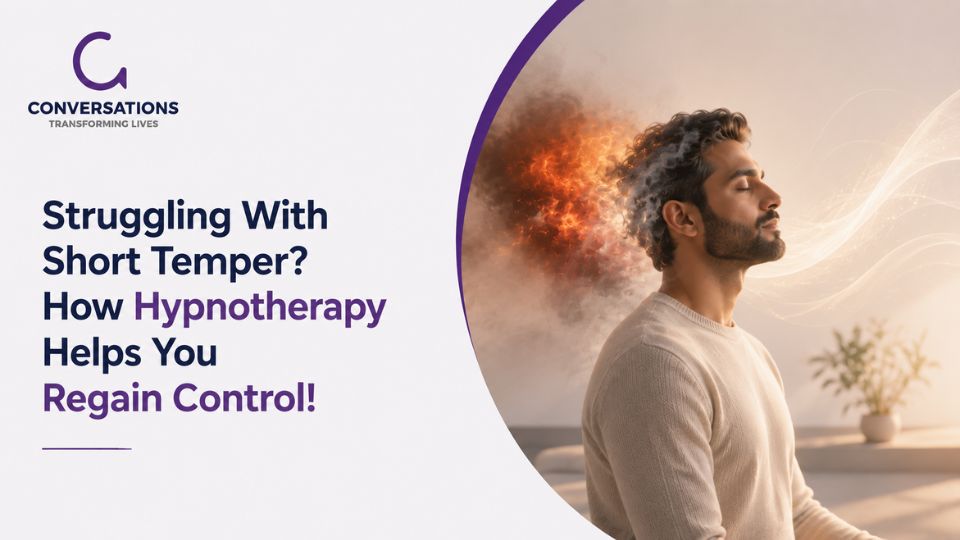
Everyone knows that feeling well. Something goes wrong: you get stuck in traffic, you cannot find your keys, or you have a misunderstanding at work, and suddenly you feel an overwhelming heat wave coming up from inside your body. Your heart is beating fast, your jaw is tense, and then you explode.
Anger is a natural human emotion, and experiencing it now and then is absolutely fine. However, if your short temper becomes a pattern of explosive outbursts, chronic irritability, or pent-up frustration, it rewrites the rules of your life and affects your relationships negatively, takes your energy, and leaves you burdened with regret.
Exploring the subconscious mind will help you dramatically. Hypnotherapy is a unique way to change the way you react to stress and frustration. Instead of just putting a lid on the boiling water, hypnotherapy will enable you to turn the heat down at its core. Read on to learn more about hypnotherapy for anger management, why your mind acts the way it does, and how to finally regain control over your emotions.
Recognizing the Signs of Anger Issues
Admitting that your anger has become an obstacle is a demonstration of self-awareness rather than a sign of your weakness. Usually, a person realizes the problems connected with their temper only when these difficulties have already done a lot of damage to their personal and professional life.
If you feel any of the following symptoms regularly, there may be anger problems hidden. These are:
-
Intense Impatience: You experience an excessive level of frustration with people who move, talk, or perform at a speed slower than yours.
-
Immediate Outbursts: You get angry immediately when something does not go according to plan and feel out of control after it.
-
Communication Troubles: You want to communicate your thoughts and feelings effectively but end up yelling, making sarcastic remarks, or using defensive arguments.
-
Regret: After getting involved in some conflict situations, you constantly regret your actions and wish you had remained cool.
-
Physical Tension: You carry frustration inside your body, which results in chronic muscle tension, headaches, or a fast heartbeat even while performing routine daily activities.
When these symptoms become a part of your life, anger stops being an emotion and starts working as a habit.
The Real Root Causes Behind a Short Temper
While having intense outbursts, we usually find reasons to blame someone outside. Our anger usually stems from a rude coworker, a slow driver, or a noisy neighbor. Nevertheless, these situations are triggers, but not the real causes of your problem.
Anger tends to be a secondary emotion. It serves as a shield protecting the emotions that are too unpleasant to face directly. Here are some of the core causes of a short temper:
-
Stress and Anxiety: In case you have a constant high level of mental load, your nervous system stays in the low-level state of "fight or flight" reaction. It means that you have no emotional capacity left, and a little irritation can easily lead to an outburst.
-
Childhood Experience: Automatic behavioral patterns are formed very early. If you grew up in an environment of explosive anger or were obliged to use aggression to attract attention or feel protected, your subconscious mind continues doing it in order to ensure safety.
-
Unmet Emotional Needs: Unfulfilled feelings of being unappreciated, unvalued, and misunderstood often transform into irritability and outbursts.
Since these patterns are deeply rooted in the subconscious mind, consciously trying to remain calm is rarely effective.
How Hypnotherapy Targets the Subconscious Mind?
Your conscious mind is responsible for your rational thinking and logical decision-making. The subconscious mind acts as a huge storeroom containing all of your memories, behavioral and emotional patterns, and survival instincts.
As soon as you come across an anger trigger, it becomes instantly bypassed. It activates the immediate reaction based on its old programming without giving you a chance to rationally assess the situation.
During the session of professional hypnosis, a certified specialist leads you into a relaxed and focused state of mind. This hypnotic state is safe and collaborative: you are not sleeping, losing control, and you cannot be forced to say or do anything against your will. On the contrary, your conscious mind recedes a bit, allowing the subconscious mind to become receptive to new suggestions, emotional regulation techniques, and behavioral patterns.
The Mechanics of Hypnosis for Anger Management
Professional hypnotherapy doesn't inhibit, cover up, or eliminate the capacity to feel angry inside you. Feeling anger is a natural human alarm system that helps detect that someone is violating one's boundaries. What hypnotherapy can do is teach your organism to interpret this signal through constructive processing. Here is the exact mechanism of change through the integrative hypnotherapy approach:
1. Identifying and Defusing Specific Triggers
Using careful attention and focusing on certain details, you will be able to uncover the roots of your irritability. Knowing exactly what moments trigger you and why they cause such reactions gives you tremendous self-awareness. The hypnotherapist will teach your organism to desensitize to those triggers, so your emotional reaction becomes weaker.
2. Interrupting Automatic Anger Responses
Anger usually appears very quickly. With the help of hypnotic techniques, you can develop an opportunity to create a mental "gap" between the provoking situation and your physical reaction. This will give you enough time and capacity to consciously make an intelligent response to the problem, not to execute the usual angry outburst.
3. Creating Opportunities for Direct Neuro-Linguistic Reprogramming
You can combine traditional hypnotic methods with modern practices of Neuro-Linguistic Programming (NLP) and Cognitive Behavioral Therapy (CBT) to change old defensive mental patterns for healthy ones. Your mind gets used to treating problems as neutral circumstances, not as a challenge to your ego.
4. Reducing General Systemic Stress Levels
Hypnotherapy is a perfect technique for helping to soothe an overexcited nervous system. Training yourself to get back into the state of profound relaxation helps you to decrease the general level of your stress and irritability. When you carry less stress with you on a daily basis, small provoking situations don't lead to big explosions.
What to Expect in an Integrative Session?
Every person experiences stress and anger in their own way. For this reason, the professional hypnotherapy framework is extremely personalized and goes at your own pace.
Standard, structured session consists of:
-
Initial Consultation: Discussing your anger habits and specific goals without any judgment or pressure.
-
Relaxation Techniques: Using breathing and focus techniques to relieve physical tension and relax your brain.
-
Therapy: Introducing behavioral suggestions and NLP techniques for reprogramming your automatic subconscious responses.
-
Integration Methods: Giving you the opportunity to develop practical mental anchors and exercises for controlling your emotions outside of therapy sessions.
For many people, a few sessions are enough to see the changes in emotional resilience and communication skills.
Conclusion
Emotional liberation is achieved by changing old mental programs that don't work anymore. Are you ready to break the vicious circle of irritation, develop better ways of communicating, and become genuinely composed? Professional guidance is waiting for you!
Contact Mohit Verma, an experienced mindset coach specializing in subconscious transformation and emotional well-being. Take the first step to your new self-control and happiness!